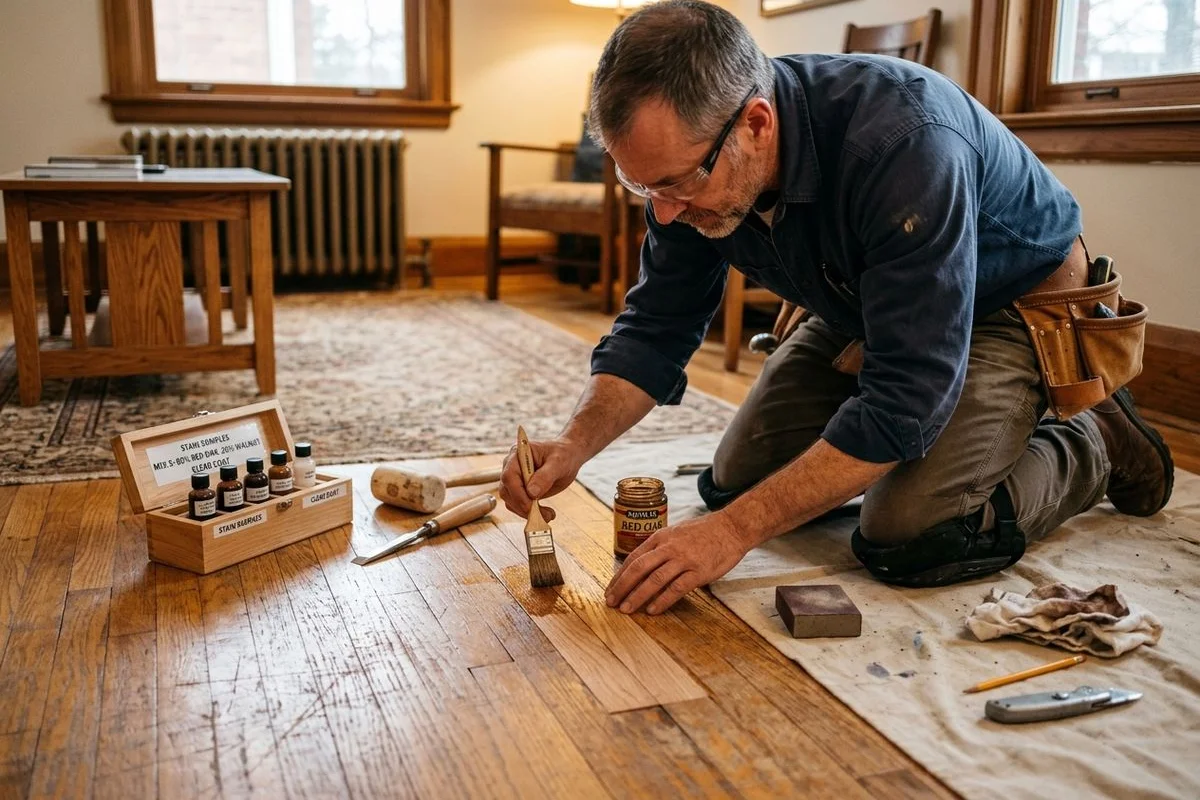
Colour-Matched Hardwood Floor Repair in Toronto, ON
Toronto Quality Wood Flooring handles hardwood floor repairs from surface scratches by screen-and-recoat through deep gouges by Dutchman patch, single-board and multi-board replacement with colour-matched stain blending using Bona DriFast or Rubio Monocoat, and cupping and crowning diagnosis with root-cause moisture testing using a calibrated Wagner moisture meter on both the floor surface and the subfloor. We source era-matched reclaimed stock through Ontario trade networks for pre-1940 narrow-board floors in Rosedale, Forest Hill, Cabbagetown, and the Annex where modern milled boards will not match grain or oxidation.
Repair scope runs from $150 for a small spot repair to $1,500 and above for multi-room board work, colour matching, and moisture-cause remediation - roughly one-third to one-tenth the cost of a full refinish or tear-out. We provide a fixed-price written quote within 48 hours of the free in-home diagnostic visit with an honest recommendation on whether spot repair, full refinish, or board replacement is the right call. Most spot repairs and single-board replacements are finished in a single visit once the quote is accepted.
Toronto Quality Wood Flooring provides hardwood floor repairs in Toronto, ON and surrounding communities, including North York, Etobicoke, Scarborough, Mississauga, Brampton, Vaughan, Markham, and Oakville.
Our Recent Hardwood Floor Repairs Jobs Across Toronto
Three repairs projects from the last six months. Same-project before and after, with scope, materials, and what the owner actually paid.
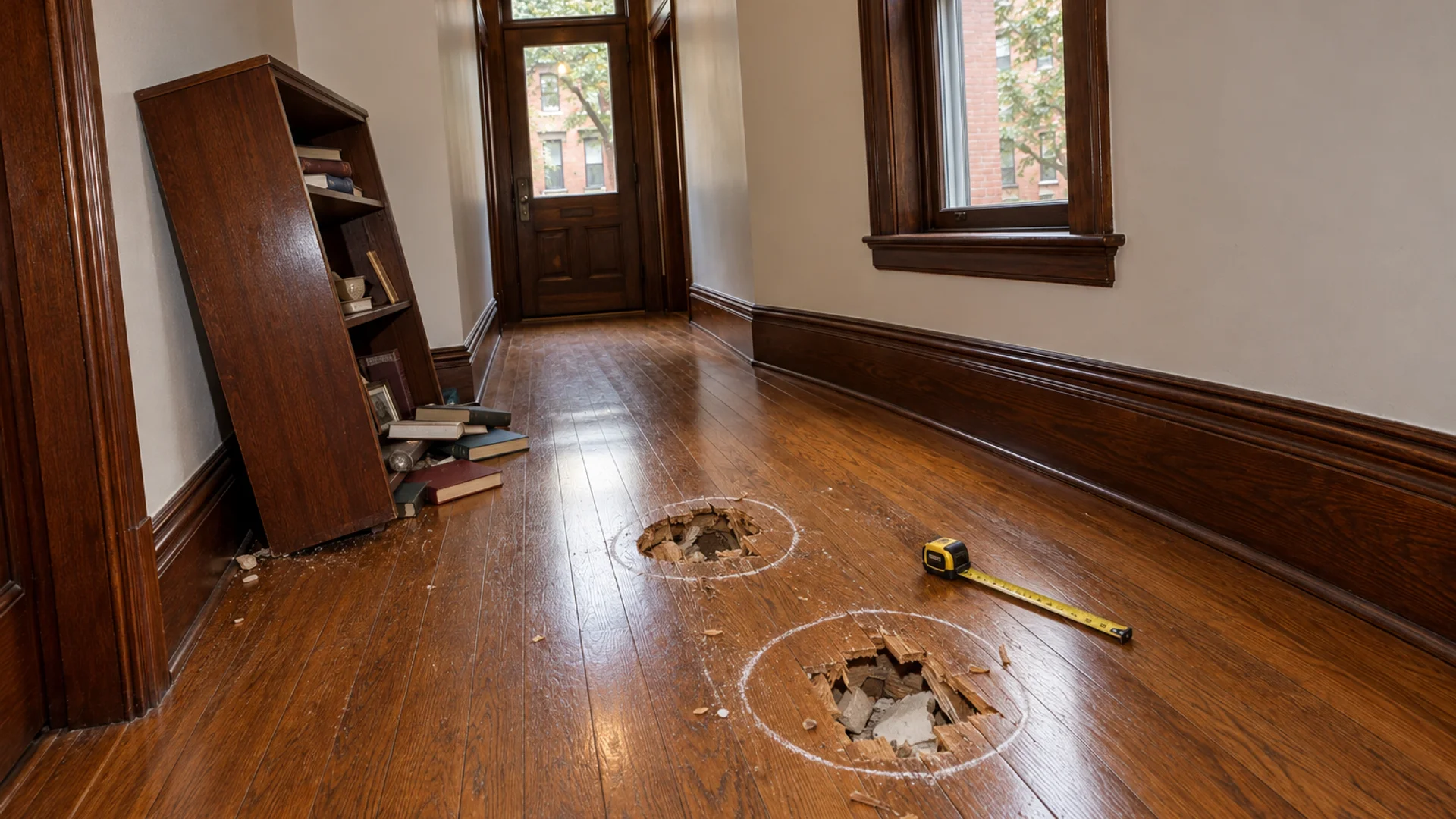
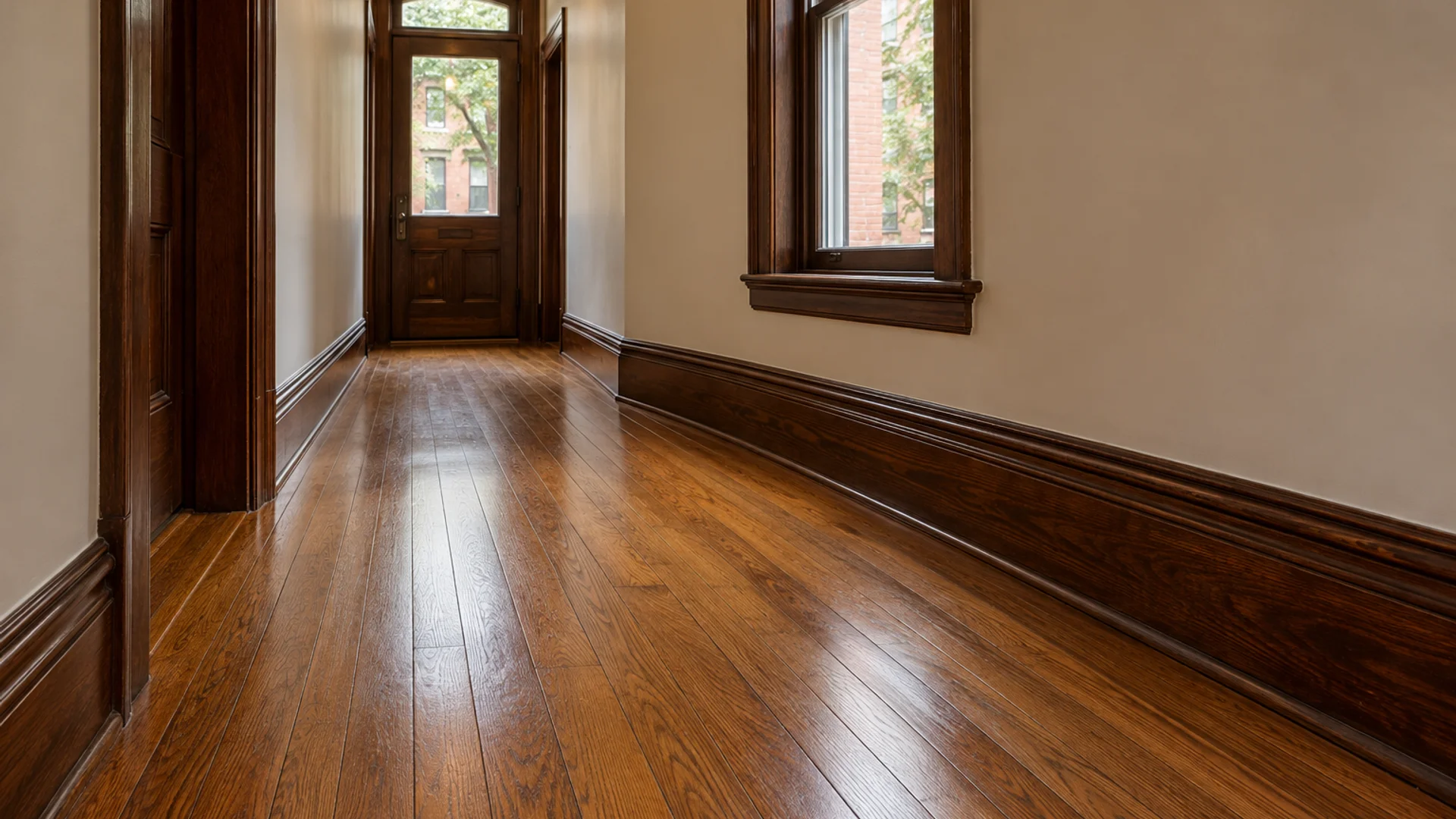
Little Italy Twin Hole Repair
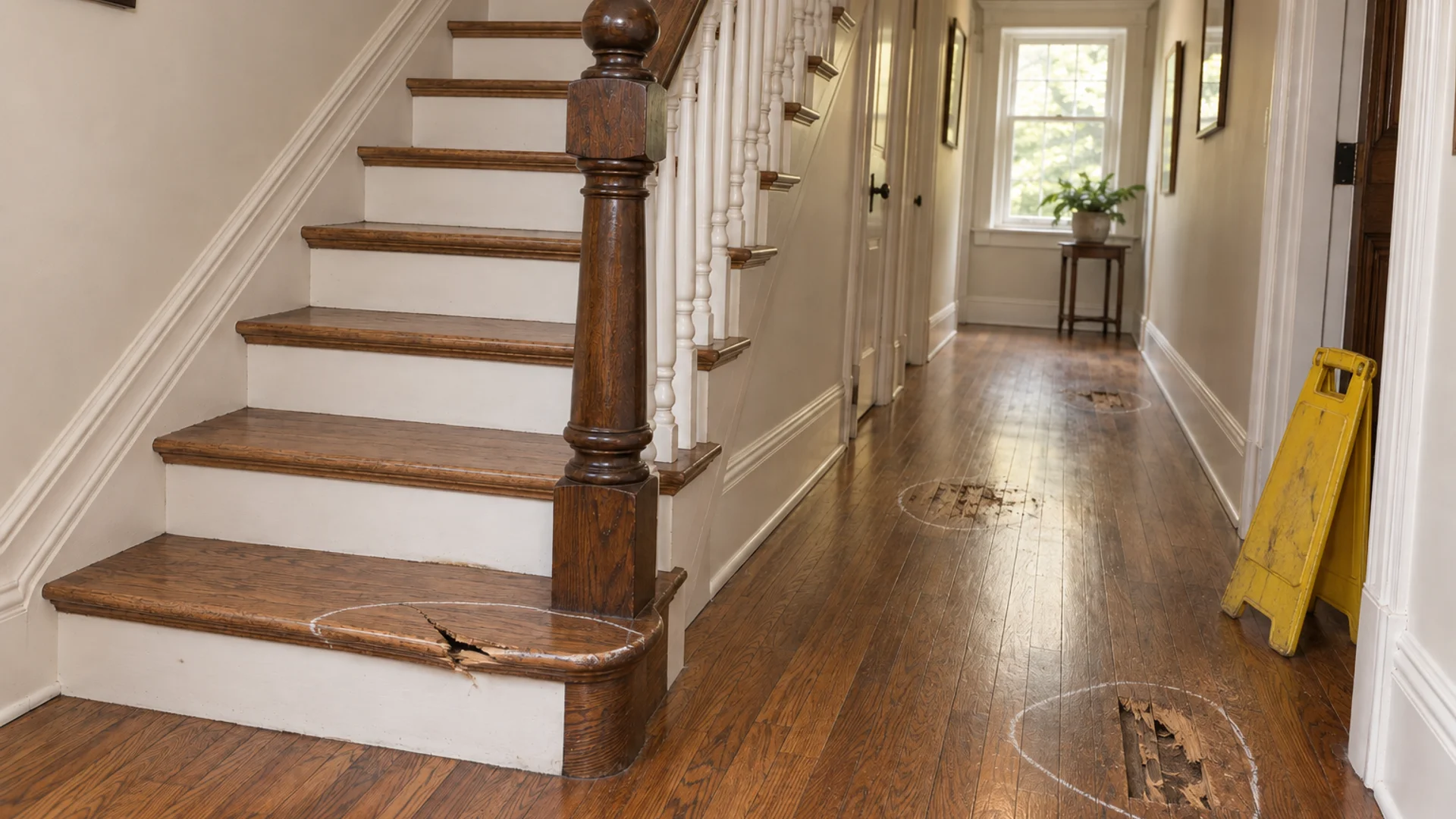
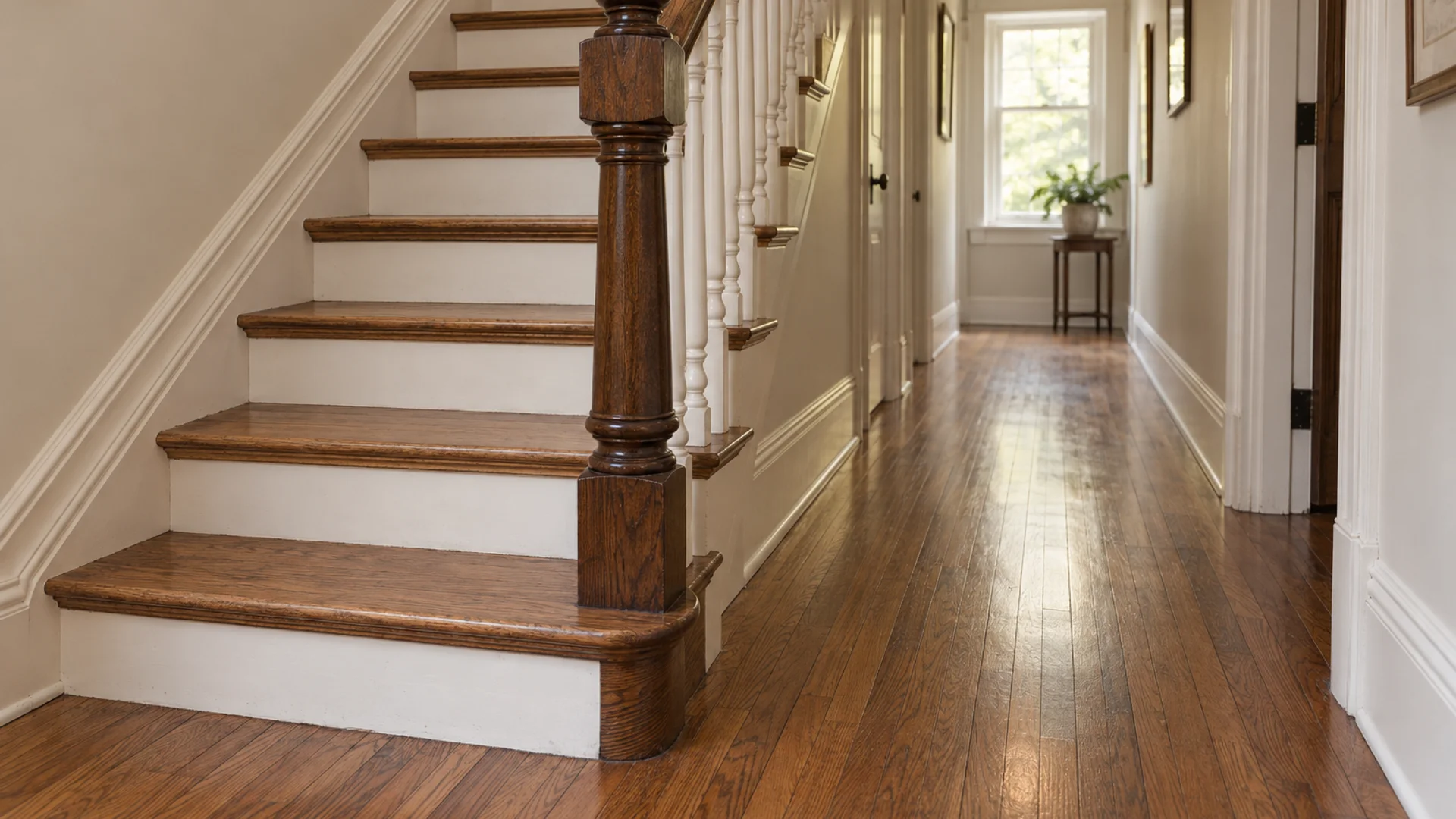
A Little Italy row-house owner had two fist-sized holes in a hallway Red Oak floor from a toppled bookshelf. We cut back to the nearest joists, laced in matching 2.25-inch Red Oak boards from salvage stock, matched the stain tone against the aged surrounding floor, and blended 2 coats of satin finish. Twin patches of this type typically run $900 to $1,200; we scheduled the repair as a same-week fill so the owner came in at $750.
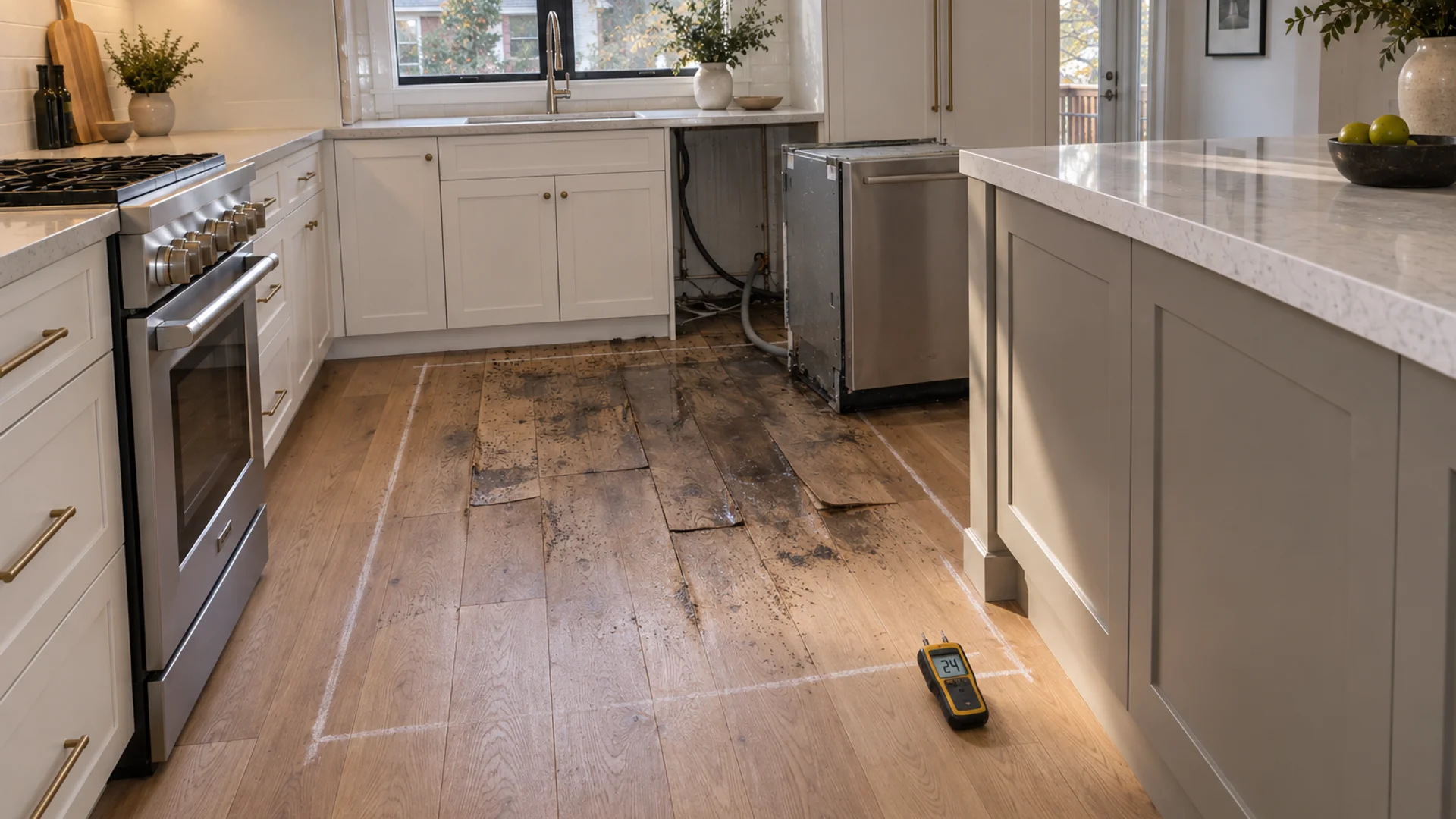
Toronto Quality Wood Flooring is a family-owned hardwood flooring contractor in Toronto, ON, and a Bona Certified Craftsman company with NWFA-trained crews. We have repaired, refinished, and installed hardwood across the city since 2005, with more than 1 million square feet of flooring installed. Repair work covers spot fills, Dutchman patches, colour-matched board replacement, and cupping diagnosis with root-cause moisture testing. It is part of our broader Toronto hardwood flooring practice, and for most homeowners it costs a fraction of a full refinish or tear-out.
The pattern we see most often: a homeowner gets three quotes, two say the whole floor needs sanding, one quotes board replacement. None of them took a moisture reading to find out why the boards cupped in the first place. Sand a cupped floor without fixing the moisture source and you have a flat floor for one summer before it cups again. The $400 repair becomes a $3,000 mistake. The diagnosis is free. Skipping it is not.
What Is Hardwood Floor Repair in Toronto?
Not every damaged floor needs a full refinish or replacement. The right repair starts with correct damage classification: surface scratch in the finish layer, deep gouge through to bare wood, cupping or crowning from moisture, board fracture, or finish failure from poor original preparation. Each has a different solution. Recommending a full sand when a spot recoat solves it - or recommending a spot recoat on a floor that needs full sanding - is the mistake that costs Toronto homeowners money.
Toronto’s housing stock makes classification matter even more. A Victorian semi-detached house in Cabbagetown with narrow red oak strip, a postwar North York bungalow with oak laid over a damp basement, and a downtown condo with engineered planks glued to a concrete slab each fail in different ways and need different fixes.
What Does a Repair Visit Include?
A repair scope covers in-home damage assessment and root-cause diagnosis, moisture meter testing (surface and subfloor) for cupping and crowning, spot-fill or Dutchman patch for gouges and scratches through to bare wood, single-board or multi-board replacement with era-matched or colour-matched stock, custom stain blending using Bona DriFast or Rubio Monocoat, and a spot recoat with Bona Traffic HD or hardwax oil to blend the repair with the surrounding finish.
How Much Does Hardwood Floor Repair Cost in Toronto?
Toronto hardwood repair runs from $150 for a small spot repair to $1,500 or more for multi-room board work, colour matching, and moisture-cause remediation (2026 pricing). Simple screen-and-recoat on a room with intact boards but dull finish runs $0.75 to $1.50 per square foot. A single board replacement with stain matching typically runs $300 to $600 depending on species and access. We provide a fixed-price written quote after the free in-home diagnostic.
Restoration Before Replacement: Saving Original Floors
Not every damaged floor needs a full refinish. Many worn floors we inspect do not need replacement at all, and the repair end of the trade offers the most honest cost savings for homeowners. Diagnostic work comes first. Replacing a damaged board for $300 is much better than paying $4,000 for a full sand and finish.
When damage is spread across a whole room, a full hardwood floor refinishing job at $3 to $8 per square foot in 2026 becomes the better value, and for heritage floors that need more than spot work, historic wood floor restoration is the next step. For limited damage, a targeted fix is the smarter financial choice. The most common repair scenarios we see across Toronto include:
- Surface scratches in high-traffic zones like kitchens and entryways.
- Cupping along exterior walls and over damp basements on the ground floor.
- Crowning from steam, spills, or constant over-humidification.
- Seasonal gaps between boards after a dry, furnace-heated Toronto winter.
- Deep gouges caused by dropped heavy objects.
- Finish flaking due to poor preparation on a past job.
- Board fractures stemming from underlying subfloor issues.
Catching these early matters. A few cupped boards fixed at the source cost a few hundred dollars. Left through another humid Toronto summer, the same moisture can spread across a room and turn a spot repair into a full sand and refinish. Our guide on when to repair vs refinish hardwood floors walks through the decision in more detail.
Scratch, Gouge, or Cupping: How We Diagnose Floor Damage
Repair work always starts with proper identification. Surface scratches usually stop at the finish layer, and a simple screen-and-recoat or spot recoat fixes these shallow marks. Through-finish scratches into bare wood need different methods. Narrow scratches are trowel-filled for a smooth look. Wider damage gets a Dutchman patch, a precision wood inlay sized exactly to the scratch profile.
Deep gouges that destroy the tongue-and-groove or break the plank itself demand a full board replacement. Cupping and crowning are never treated as surface problems. They are moisture symptoms that need deeper investigation, so Toronto Quality Wood Flooring crews test with a Wagner moisture meter on both the floor surface and the subfloor. Measuring the Equilibrium Moisture Content confirms exactly what is happening inside the wood, and no floor sanding starts on a cupped floor until the readings are back in range.
Sanding first produces a flat floor that re-cups within a single year. Finding the root cause first is what makes the repair last. NWFA guidance puts the safe range for most hardwood at 30% to 50% relative humidity year-round. In a Toronto home that usually means a furnace-mounted humidifier through January and February, and a dehumidifier or central air in the basement through the humid summer months. We check your HVAC settings as part of the diagnostic. For more on moisture-driven damage, see our guide to fixing cupping and crowning in hardwood floors.
Here is a quick breakdown of how different damage types are treated:
| Damage Type | Depth of Damage | Required Repair Solution |
|---|---|---|
| Surface Scratch | Finish layer only | Screen-and-recoat |
| Narrow Gouge | Through to bare wood | Trowel-filling |
| Wide Scratch | Deep into wood grain | Dutchman patch inlay |
| Broken Plank | Destroys tongue-and-groove | Full board replacement |
| Cupping or Crowning | Whole board shape, moisture driven | Moisture remediation, then sanding flat if needed |
Each floor gets the specific fix its damage calls for, not a default full sand.
Can a Replaced Board Match the Rest of the Floor?
Removing a damaged board requires a delicate touch. It comes out cleanly so the tongue-and-groove on the surrounding planks is preserved. Installing a matching replacement is the next crucial step, using modern milled stock that matches your exact species, width, grade, and thickness. In condos and newer homes with engineered wood flooring glued to a concrete slab, the damaged plank is replaced with matching engineered stock and bonded with the same adhesive system.
Pre-1940 narrow-board and quartersawn floors, common in the Victorian and Edwardian homes of Rosedale, Forest Hill, Cabbagetown, and the Annex, need a special approach. We source reclaimed era-matched stock through a specialized trade network for these historic homes, so the grain pattern and natural oxidation blend with the original wood. Stain matching is where the craftsmanship shows. Finding the right hue means accounting for the original stain choice and decades of UV-aging. We custom-blend Bona DriFast or Rubio Monocoat to match your existing floor.
These two finish options offer distinct benefits for different homes:
- Bona DriFast: An oil-modified penetrating stain that is ready for topcoat in about two hours, then sealed under a waterborne finish such as Bona Traffic HD.
- Rubio Monocoat: A 0% VOC hardwax oil that colours and protects in a single coat, penetrating into the wood fibres rather than forming a film on the surface.
Our team follows one strict rule on every single job.
”Never mix finish systems within the same house. Applying a hardwax oil in the living room and a polyurethane in the hallway creates inconsistent sheens and maintenance headaches.”
That rule keeps the whole home uniform. On most projects the final result is invisible during a casual walk-through. The estimate tells you plainly what to expect: on wide-plank exotic species under harsh raking light, a trained eye can sometimes spot the repair, and you will know that before any work starts.
Free In-Home Repair Diagnostics Across the GTA
Booking a repair starts with a free in-home diagnostic visit. Small repairs get the same care as full installations, because original hardwood carries real historical and aesthetic value, especially in older Toronto character homes. The goal is to save that original floor instead of pushing for a full tear-out.
We run repair diagnostics across the City of Toronto, from North York and Scarborough to Etobicoke, and across the Greater Toronto Area in Mississauga, Vaughan, Markham, Brampton, and Oakville. The same crews handle commercial repair work, and Toronto Quality Wood Flooring has been trusted by local school boards and commercial contractors since 2005.
The diagnostic process is straightforward and transparent. We photograph the damage, identify the exact root cause, and recommend the smallest effective intervention. You receive a firm, fixed-price quote within 48 hours of the visit.
Every fixed-price quote includes specific details:
- A clear explanation of the root cause.
- The exact repair method recommended.
- A timeline for completion.
- A final price that will not change.
We refuse to upsell a minor spot repair into a whole-house sanding job. If another contractor told you the floor needs total replacement, a second opinion is worth getting: a $300 to $600 board replacement against a full refinish at $3 to $8 per square foot is often a difference of thousands of dollars. Toronto homeowners trust us for 5-star hardwood repair work across the GTA. Call 647-905-0255 or use the contact form to book a visit.
How Our Repairs Compare
| Feature | Typical Provider | Toronto Quality Wood Flooring |
|---|---|---|
| Cupping diagnosis | Visual inspection, quote to sand | Wagner moisture meter readings on floor and subfloor before any sanding |
| Recommendation | Full sand and refinish as the default | Smallest fix that solves the problem: spot repair, board replacement, or refinish |
| Replacement boards | Closest stock available | Matched species, width, grade, and thickness; reclaimed era-matched stock for pre-1940 floors |
| Colour match | Off-the-shelf stain | Custom-blended Bona DriFast or Rubio Monocoat, spot-recoated with Bona Traffic HD |
| Quote | Hourly or adjusted on site | Fixed-price written quote within 48 hours of a free diagnostic |
| Credentials | Varies | Bona Certified Craftsman, NWFA-trained, repairing Toronto floors since 2005 |
Repairs - What's Included
- Cupping and crowning diagnosis with root-cause moisture check
- Single-board and section replacement with colour-matched stain
- Spot repair for surface scratches, gouges, and chips
- Pet-damage and water-damage restoration
- Dutchman patch technique for deep gouges in wide-plank floors
- Honest 'repair vs full refinish' recommendation
- Same Bona Certified finish quality on spot repairs
- Moisture meter testing to identify root-cause issues
Repairs Pricing
All projects priced after a free in-home estimate. Written fixed-price quote within 48 hours - no surprises.
Why Toronto Homeowners Trust Us for Repairs
Honest Repair Diagnosis
We will tell you when a spot repair solves it and when a full refinish is the right call. We lose business sometimes; we never oversell.
Root-Cause Moisture Testing
Cupping and crowning are moisture symptoms. Sanding a cupped floor that still has wet subfloor below just creates a flat floor that will cup again. We test first.
Colour-Matched Board Replacement
When a board has to come out, we custom-match stain and species so the replacement blends. The eye should not pick it out on a casual walk-through.
Bona Finish Quality on Spot Work
Spot repairs get the same Bona Traffic HD or Rubio hardwax oil finish as full projects. The result holds up to the same use.
Our Repairs Process
Diagnose
We assess the damage type - surface scratch, finish failure, deep gouge, cupping, crowning, fracture - and identify the root cause (moisture, subfloor, wear) with a Wagner moisture meter on the floor and subfloor.
Recommend
We tell you the smallest intervention that solves the problem. Sometimes that is a spot repair; sometimes it is a board replacement; sometimes it is a full refinish.
Execute
Spot-fill, single-board replacement, Dutchman patch, or moisture remediation per the plan. Colour-matched stain blending where the work is visible.
Finish & Blend
Spot-recoat with Bona Traffic HD or hardwax oil so the repair blends. Where blending is not possible, we recommend a full-floor recoat to even out sheen.
Ready for a free in-home estimate?
Fixed-price written quote within 48 hours. No surprises. No high-pressure calls.
Our Repairs Portfolio


What Customers Say About Our Repairs
★★★★★"Four boards cupping in our living room and three other companies quoted us a full sand. These guys brought a Wagner moisture meter, found the slab reading was out of spec, and told us to fix the source before touching the floor. Six weeks with a dehumidifier, the cups came down on their own, and they did a spot repair instead of a $4,000 refinish. Exactly what they said would happen."
★★★★★"Deep gouge from a furniture move across three boards of our White Oak. Dutchman patch, stain-matched with Bona DriFast, finished to blend. You can find it if you know where to look and kneel in direct light. Standing height, it is completely gone."
★★★★★"Pet scratches through the finish on two areas of our Red Oak. Screen-and-recoat on those sections with a colour-matched Bona Traffic HD recoat. One-day job. Looks brand new and cost a fraction of what a full sand would have. Would not have believed a spot repair could blend this well."
Repairs FAQs
How much does hardwood floor repair cost in Toronto?
Hardwood floor repair in Toronto runs from $150 for a small spot repair to $1,500 or more for multi-room board work, colour matching, and moisture-cause remediation (2026 pricing). A single board replacement with stain matching typically costs $300 to $600 depending on species and access, and a screen-and-recoat on a room with intact boards runs $0.75 to $1.50 per square foot. Toronto Quality Wood Flooring gives a fixed-price written quote within 48 hours of a free in-home diagnostic, with no hourly billing.
Can scratched hardwood floors be repaired without a full refinish?
Yes, in most cases. Scratches that stop at the finish layer are fixed with a spot recoat or a screen-and-recoat. Deeper scratches into bare wood need trowel-filling if narrow, or a Dutchman patch (a precision wood inlay sized to the scratch) if wide. Only widespread damage across a whole room calls for a full sand and refinish, and the depth is checked during the in-home visit.
What causes cupping in hardwood floors and how is it fixed?
Cupping is a moisture symptom. The floor took on water from below (a wet subfloor, a leak, or a damp basement) and the bottom of each board expanded faster than the top, so the board edges rise above the centre. The fix is to find and eliminate the moisture source, let the wood re-equilibrate at 30% to 50% indoor relative humidity, confirm the readings with a moisture meter, and only then sand flat if the cups have not settled on their own. Sanding a cupped floor before fixing the moisture produces a flat floor that cups again.
Can water-damaged hardwood floors be repaired?
Often, yes, if the water is stopped quickly. Once the leak is fixed and the floor and subfloor are dried with dehumidifiers and confirmed dry with a moisture meter, mild cupping frequently flattens on its own and needs only a light sand or recoat. Boards that have buckled, split, or turned black from water soaking into the wood grain need to be replaced with matching stock.
Can a single damaged board be replaced?
Yes. Board replacement is a routine repair. The damaged board is cut out while preserving the surrounding tongue-and-groove, a replacement is sourced in matching species, milling width, grade, and thickness, and stain is custom-blended with Bona DriFast or Rubio Monocoat to match the existing tone and UV aging. For pre-1940 narrow-board floors, reclaimed era-matched stock is sourced through Ontario trade networks for a closer grain and oxidation match.
Will the repair be visible after stain matching?
On most projects the repair is not visible on a casual walk-through. On wide-plank floors or unusual species, a careful eye in raking light may pick it out. The estimate states honestly whether the result will be invisible or visible-but-acceptable, and where a single replaced board would stand out, a full-floor recoat is recommended to even out the sheen.
Is it cheaper to repair or refinish hardwood floors?
For limited damage such as a few boards, one room, or surface scratches, repair is much cheaper: a board replacement runs $300 to $600, while a full refinish in Toronto costs $3 to $8 per square foot in 2026. For widespread surface wear plus board damage, a full refinish is often cheaper than scattered repairs because the per-square-foot cost drops at scale. We give a side-by-side cost comparison at the in-home estimate.
How long does hardwood floor repair take?
Most spot repairs and single-board replacements are finished in one visit. Multi-board work with stain matching usually takes one to two days. Cupping caused by moisture takes longer because the floor has to dry out before any sanding; one Etobicoke floor needed six weeks with a dehumidifier before the cups settled and a spot repair could be done.
Can I stay home while my hardwood floor is being repaired?
Yes. Spot repairs and board replacements are confined to the damaged area, so the rest of the home stays usable. We use waterborne finishes such as Bona Traffic HD, which have far less odour than oil-based polyurethane, and keep foot traffic off the repaired section until it is dry. If the job grows into a full sand, dust is controlled with the Bona Dust Containment System.
Repairs Guides & Resources
Fixing Cupping and Crowning in Hardwood Floors
Cupping is moisture from below; crowning is moisture from above. Fix the cause first, then sand. The diagnostic process for Toronto hardwood moisture damage.
Repairing Scratched, Gouged, and Dull Hardwood Floors
Surface scratches vs through-finish gouges vs general dullness - three different fixes. Spot repair, screen-and-recoat, Dutchman patch, full refinish.
When to Repair vs Refinish Hardwood Floors
Spot repair when damage is isolated; full refinish when wear is widespread. The cost and disruption tradeoffs explained for Toronto homeowners.
More Toronto Hardwood Flooring Services
Ready to Book Repairs?
Twenty years of Toronto craftsmanship. Bona Certified. Fixed-price written quote within 48 hours of the in-home visit.
Get Your Free Estimate Call 647-905-0255