The key distinction: finish layer vs wood layer
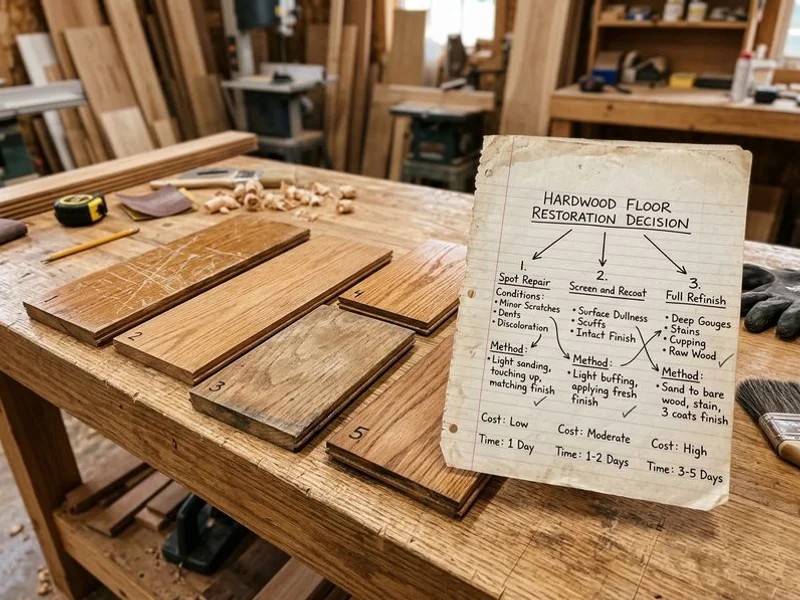
Recoating and refinishing address different problems. Understanding which one applies to your floor comes down to one question: is the damage in the finish layer, or has it reached bare wood?
- Finish layer damage - dullness, cloudiness, light surface scratches that do not penetrate through the finish. The wood fibres underneath are protected. Recoating works here.
- Bare wood exposure - scratches that show a lighter colour beneath the finish, areas where water soaks in immediately, black staining in the grain. The finish has failed. Recoating will not bond. Full refinishing is required.
The distinction matters because recoating requires a clean, sound finish surface to adhere to. A screen-and-recoat applies a fresh coat of finish on top of the existing finish - it does not remove or replace it. If the existing finish is compromised, scratched through, contaminated, or missing in patches, any new coat applied over it will either not bond or will bond inconsistently and delaminate within months.
The water bead test
Before booking any service, run the water bead test to determine where your floor stands.
How to do it:
- Choose the most worn area of the floor - typically in front of a sofa, in a hallway doorway, or in the traffic lane between kitchen and living room.
- Pour one tablespoon of water onto the surface.
- Wait 60 seconds and observe.
What the result means:
- Water beads into a distinct droplet - the finish is still sealing the surface. Recoating is a viable option, subject to the scratch and contamination checks below.
- Water spreads slightly but does not soak in - the finish is thinning. Recoating now, before bare wood is exposed, is the best maintenance move.
- Water soaks in slowly over 30-60 seconds - the finish has worn through in this area. Full refinishing is required. Recoating over bare wood does not provide a durable result.
- Water soaks in immediately - the finish is gone. The wood fibres are absorbing directly. Recoating is not appropriate here.
The test should be performed in multiple locations - traffic lanes carry different wear than furniture edges or room perimeters. One soaking zone in an otherwise intact floor may indicate a spot where recoating alone is insufficient.
When recoating is the right call
Recoating delivers excellent value in these situations:
Maintenance recoat on a floor in good condition - the most common use case. The floor looks dull and flat but the finish is intact when tested. Recoating every 3-5 years on a residential floor keeps the finish layer topped up and delays the full refinish by years. This is the correct programme for Toronto homes where the original floor is in good structural condition.
Light surface scratches without bare wood - hairline scratches in the finish layer that have not penetrated to bare wood. These are visible as dull marks but do not catch a fingernail when run across the surface. The buffer scuffs the existing finish surface (including the scratch), fresh coats fill in the surface texture.
Dullness in traffic lanes - the finish in a specific pathway (hallway, kitchen thoroughfare, area in front of sofa) has worn flat but has not yet broken through. Recoating the entire floor renews the surface and prevents the worn lane from progressing to bare wood.
Pre-sale preparation - a recoat refreshes the floor’s appearance in 1-2 days, costs a fraction of full refinishing, and produces a result that shows well in listing photos and showings.
When full refinishing is required
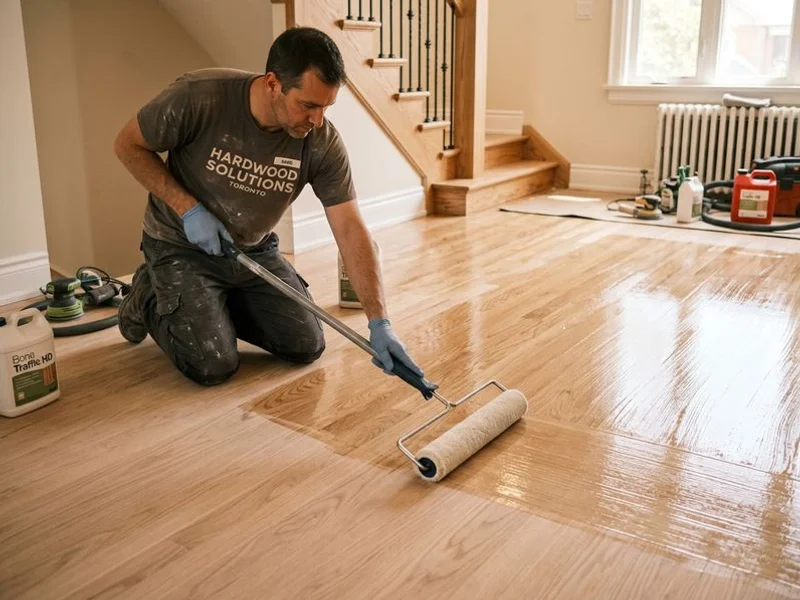
Several conditions make recoating either ineffective or inappropriate:
Bare wood is visible anywhere on the floor - scratches that show a lighter wood colour, areas where the grain is exposed, or any point where water soaks in during the bead test. Once bare wood is exposed, recoating over it provides inconsistent adhesion and will fail in those areas first.
Deep scratches through the finish - a scratch you can feel when running a fingernail perpendicular to the groove has likely penetrated through the finish into the wood fibre. These cannot be buffed out and will telegraph through a recoat.
Black staining in the grain - black or grey discolouration in the wood grain indicates iron acetate (a reaction between tannins in the wood, moisture, and metal residue) or mould penetration into the fibres. These stains are below the finish layer and require sanding to treat before any new finish is applied.
Previous wax application or oil-based cleaners - if the floor has ever been treated with paste wax, liquid wax, Murphy Oil Soap, Mop&Glo, Orange Glo, or any oil-based cleaner, the surface cannot receive a waterborne finish coat without full sanding. These products leave a residue that prevents bonding. A recoat over a waxed floor will delaminate. There is no prep step short of sanding that reliably removes wax contamination from a wood floor.
Visible discolouration across the floor - yellowing of the existing finish, grey haze that does not respond to cleaning, or uneven colour from pet urine or water damage requires sanding to address the wood itself.
Comparison at a glance
| Factor | Screen and recoat | Full refinishing |
|---|---|---|
| Cost range (Ontario) | $1.50-3/sq ft | $3-8/sq ft |
| Typical 600 sq ft total | $900-1,800 | $1,800-4,800 |
| Project timeline | 1 day | 3-5 days |
| Walk-on time | Same day | 24 hours after final coat |
| Furniture return | 24-48 hours | 72 hours (Bona Traffic HD) |
| Removes scratches | Surface only (finish layer) | Yes - sands to bare wood |
| Addresses bare wood | No | Yes |
| Colour change possible | No (clear coat over existing) | Yes (stain before finish coats) |
| Contamination disqualifier | Yes - wax/oil cleaner = fail | No - sanding removes contamination |
| Wears wood layer | No (no sanding) | Yes (~1mm per refinish) |
| Best for | Dull, worn finish; maintenance cycle | Scratches through finish, bare wood, stain change |
Decision flowchart
Work through these questions in order:
1. Is any bare wood visible (lighter colour in scratches, water soaking in immediately)? Yes - full refinishing required. Recoating will not bond adequately over bare wood. No - continue to question 2.
2. Has the floor ever been treated with wax, Murphy Oil Soap, Mop&Glo, or any oil-based cleaner? Yes - full refinishing required. Contamination prevents waterborne finish from bonding. Unsure - apply the water bead test in multiple areas. If results are inconsistent (beads in some spots, soaks in others), contamination is likely present in the soaking areas. No - continue to question 3.
3. Do any scratches catch a fingernail? Yes - those scratches penetrate through the finish. If concentrated in one zone, spot repair and refinish of that area may be possible. If widespread, full refinishing is the more predictable result. No - continue to question 4.
4. Is there black or grey staining in the grain that does not wipe off? Yes - iron acetate or mould staining is below the finish layer. Sanding is required to treat it. No - continue to question 5.
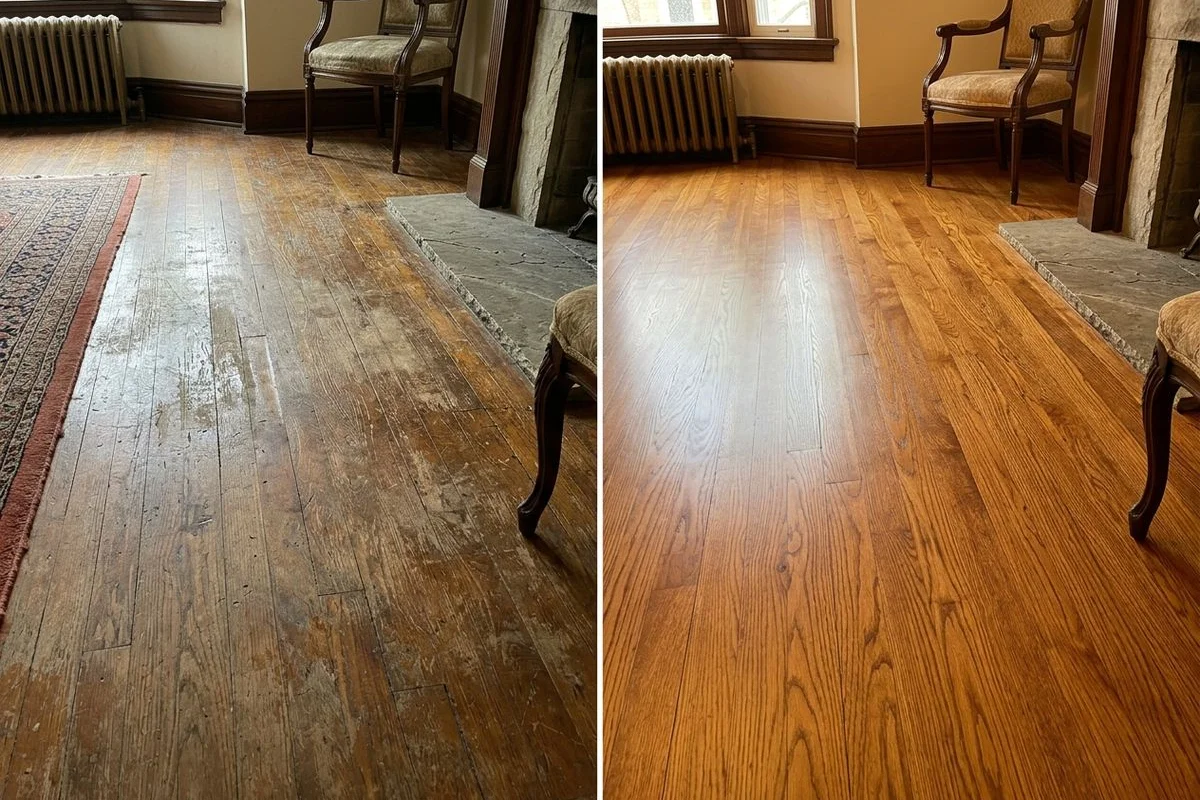
5. Does the water bead test show beading or slow spreading (not soaking in)? Yes - your floor is a recoating candidate. Hardwood floor buffing and recoating will renew the finish without the cost or disruption of full refinishing. No (water soaks in) - full refinishing is required.
The ideal recoating programme
Recoating is most effective as a recurring maintenance step rather than a one-time rescue. On a residential floor in moderate use, the right programme is:
- Full refinish when the floor is first restored or installed
- First recoat at 3-5 years - before any bare wood appears
- Second recoat at 6-10 years
- Full refinish when deep scratches or bare wood eventually appear - typically at 10-15 years depending on use
This programme extends the time between full refinishes, preserves more of the floor’s wear layer (since recoating does not remove wood), and keeps the floor looking consistently well-maintained. Each full refinish removes approximately 1mm of wood from the wear layer. A standard 3/4-inch solid floor has approximately 6mm of wear layer above the tongue - maintaining it with regular recoats instead of frequent refinishes can add decades to the floor’s functional life.
Book your assessment
Toronto Quality Wood Flooring provides on-site assessments that include the water bead test, scratch depth check, and contamination test at no charge. If the floor passes all three, recoating is booked and completed in one day. If any check indicates full refinishing is needed, the assessment produces a written fixed-price quote within 48 hours. Contact Toronto Quality Wood Flooring to schedule across Toronto, North York, Scarborough, Etobicoke, and the surrounding GTA.